

If your bagging line is already running at several hundred bags per hour, palletizing can quickly become the next bottleneck. Finished bags may start to queue at the end of the line. But you do not necessarily need the fastest palletizer available. We normally match the palletizing section to your bags per hour, bag weight and available floor space. Your pallet pattern and stacking height also matter. If these conditions stay fairly stable, a compact column palletizer may be enough. If you change products or pallet patterns regularly, a robot gives you more flexibility. For higher continuous output, we can move to a high-level palletizing system. Our palletizing configurations can cover fertilizer, feed, grain, chemicals, minerals, building materials and other bagged products.
Which Automatic Palletizing Machine Fits Your Bagging Line?
You can narrow the choice by looking at three conditions. Start with your actual bags per hour and how often your pallet pattern changes. Then check the available space at the end of the packaging line.
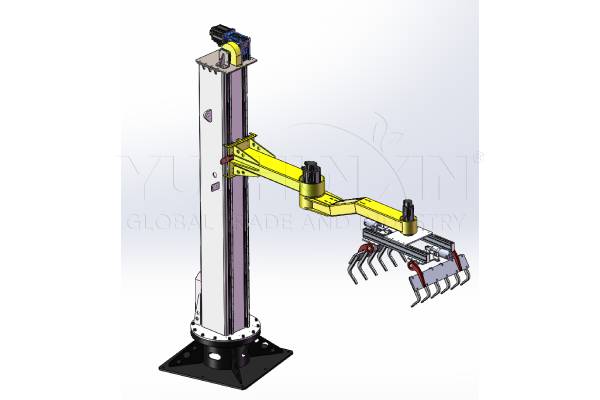
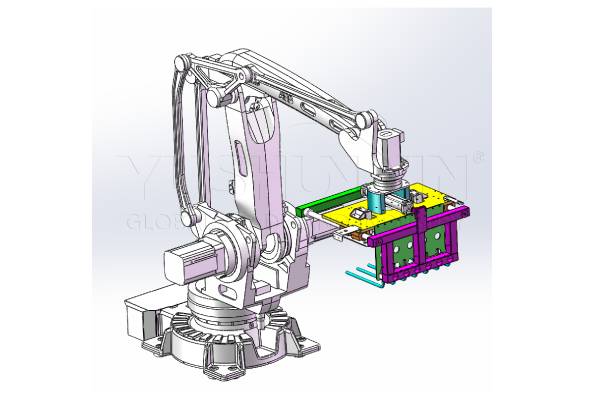
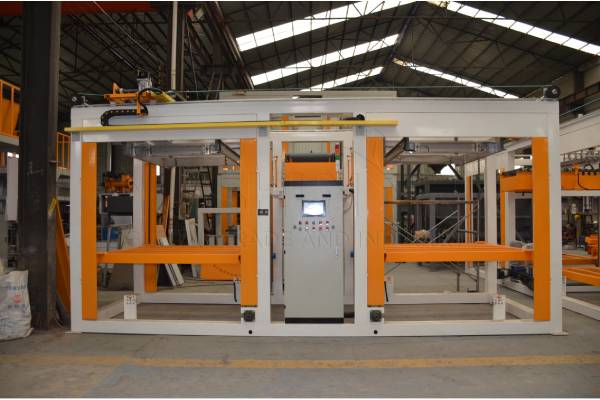
Can a Column Palletizer Handle 400–450 Bags/Hour Without Taking Too Much Floor Space?
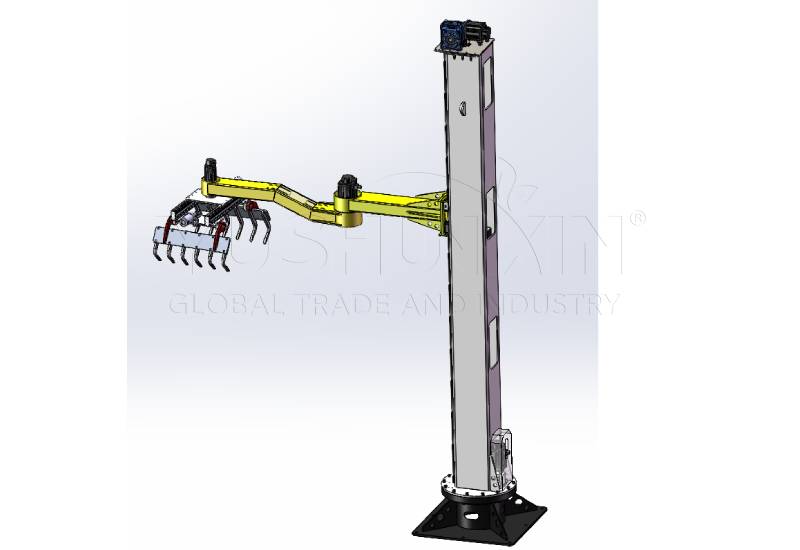
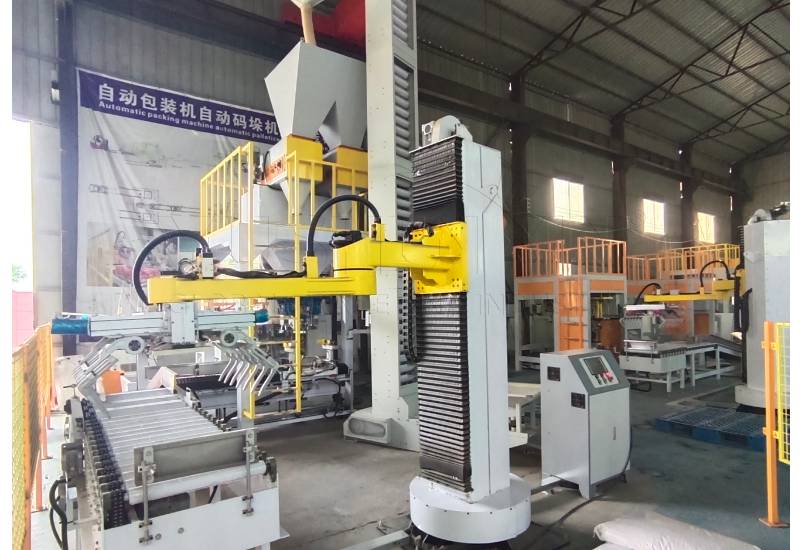
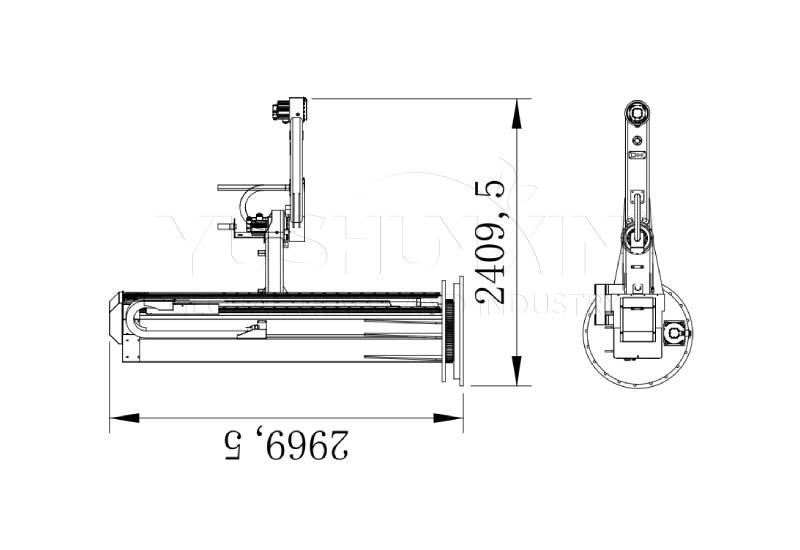
If you have limited room beside the bagging line, you may not need a large robotic workcell. This is especially true when your bag specification does not change very often. A column palletizer keeps most palletizing movements around one vertical structure. This helps you use the available workshop area more efficiently.
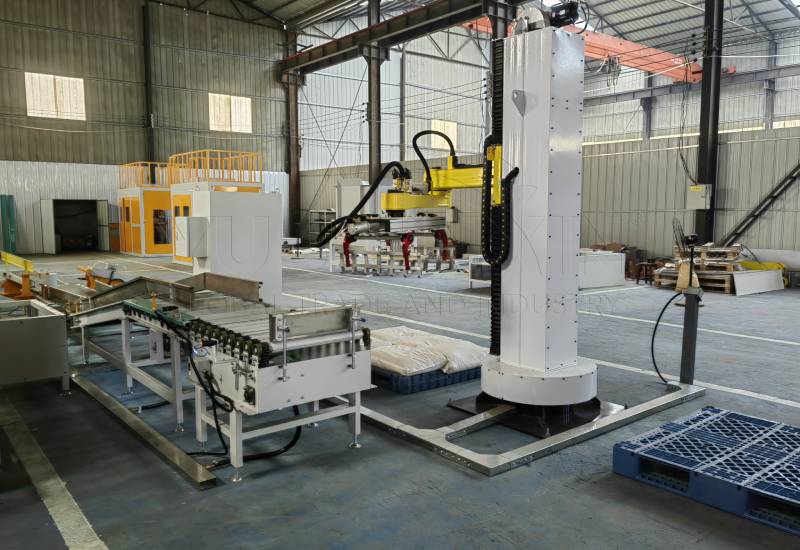
When Is a Robotic Bag Palletizer Better for Changing Products and Pallet Patterns?
A fixed stacking route becomes less convenient when one packaging line handles several products. The same applies when bag sizes or pallet patterns change regularly. If you need to change the stacking arrangement without rebuilding the palletizing section, we would normally consider a robotic bag palletizer.
Around 600 Bags/Hour with Programmable Pallet Patterns
For packaging lines running at around 600 bags per hour, we can configure the robot around your required stacking rhythm. We can also match the palletizing program to your selected pallet pattern. Instead of mechanically changing the palletizing route each time the product changes, you can store different stacking programs in the control system. This is useful when the same line handles several fertilizer grades or feed products. You can switch between different pallet arrangements more easily.


Match the Robot Gripper to Your Filled Bag
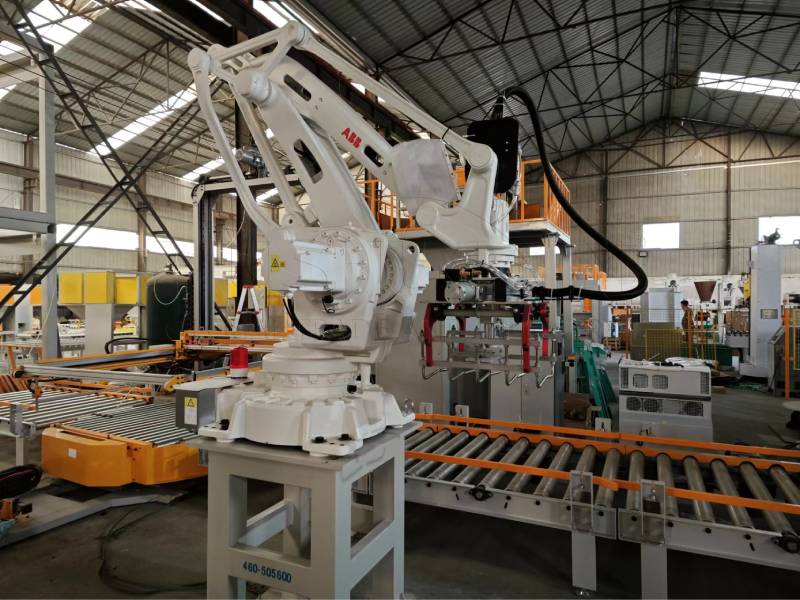
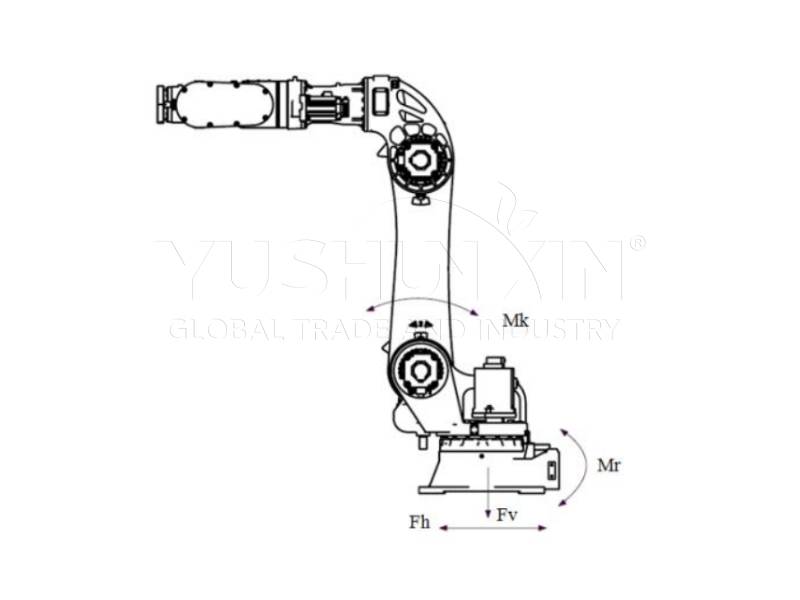
We can use an aluminum insert-type gripper for bag pickup. The handling arrangement can then be adjusted around your bag dimensions and filled-bag condition. The important point is not only whether the robot can lift the bag. We also look at how consistently each bag reaches the pickup position. One bag may arrive flat while the next is heavily bulged at one end. In that case, the robot is working with two different package shapes. That is why we normally check bag conditioning together with the robot. Pickup speed alone does not tell you whether the pallet will stay consistent.
Protect the Robot Cell with a 1.8 m Safety Fence and Light Curtains
If forklifts or operators move close to the palletizing area, we can separate the robot from normal workshop traffic. The configuration can include a 1.8 m safety fence, light curtains and emergency-stop protection. At pallet access points, we can match the safety arrangement to the way you remove finished pallets. This keeps pallet discharge practical while separating normal traffic from the robot working area.


When Do You Need a High-Level Palletizer for 600–1200 Bags/Hour?
Once your packaging line moves beyond medium output, the palletizing section has less room for delay. Bags may keep arriving while a completed pallet is still waiting to leave the station. At that point, robot speed is not the only concern. Pallet supply, stacking height and finished-pallet discharge also need to keep up. For this type of project, we would normally look at a high-level bag palletizer.
Why Do Uneven Filled Bags Cause Problems Before Automatic Palletizing?
You can have an accurate palletizer and still end up with an uneven pallet. The problem often starts before the bag reaches the palletizing machine. Powder or granules may shift after filling. One bag can arrive thicker in the middle, while another carries more material near one end. Once these differences repeat across several pallet layers, gaps and leaning become much easier to see.
Powder, granules and mixed materials do not always stay evenly distributed after filling and sealing. As the bag leaves the packing machine, material can collect toward one side or one end. If you send that bag directly to the palletizer, the machine has to work with whatever shape arrives. You may already be seeing uneven layers, visible gaps or a pallet that gradually leans. In this case, increasing palletizer speed will not solve the root problem. We would first look at the bag shape entering the palletizing section.
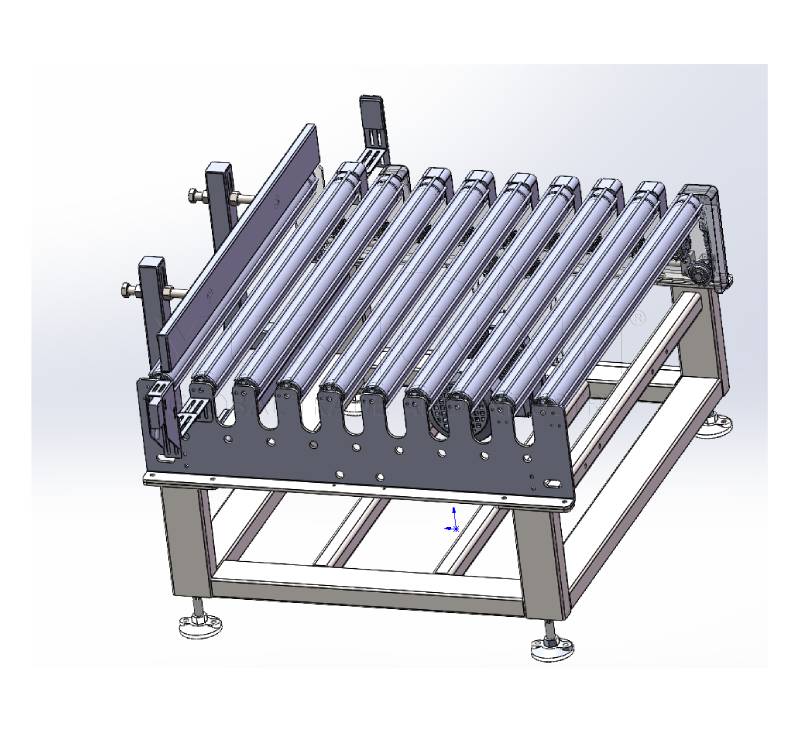
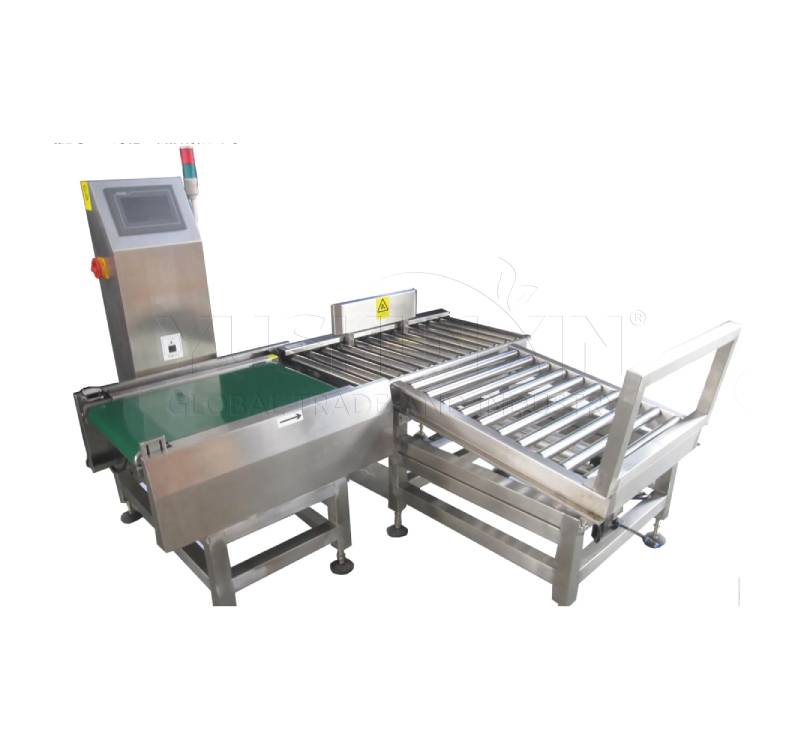
For this situation, we can arrange the bag route as: Sealing → Bag Turning → Incline Conveying → Bag Shaping → Palletizing. After sealing, we first put the bag into the required orientation. As the bag travels along the inclined conveyor, the material has more opportunity to redistribute inside the package. The shaping section then presses the bag into a flatter form before pickup. By the time the bag reaches your palletizer, its position and shape are more consistent.
Once the incoming bags have a more regular shape, the palletizer can repeat the selected pattern more accurately. You are no longer asking the machine to compensate for several different bag shapes within the same layer. For projects where pallet stability matters, we normally configure the bag-conditioning conveyor together with the palletizer. Forklift handling and warehouse stacking are also part of this decision. The goal is not simply to make each bag look flatter. You are giving the palletizing system a more consistent starting point for every layer.
Build Your Palletizing Solution with YUSHUNXIN
Before we configure the line, send us your bag weight, required bags per hour and pallet size. With these conditions, we can match the palletizer and bag-conditioning section to your actual production. YUSHUNXIN can then configure the supporting pallet handling equipment around the same line rhythm.
Get Your Fertilizer Project Proposal
Share your raw materials, production capacity and project requirements. Our engineering team will provide a suitable fertilizer production solution.


