

Bio fertilizer is an upgraded form of organic fertilizer. It contains beneficial microorganisms that help improve soil activity and nutrient use. A good Bio Fertilizer Production Plan should not only focus on output. More importantly, it can protect active microorganisms during composting, inoculation, mixing, granulation, drying, cooling, and packaging. If you plan to start a bio fertilizer business, YUSHUNXIN can help you design a suitable production line for powder or granular products.
What Is the Complete Process of Bio Fertilizer Production?
Bio fertilizer production can make either powder fertilizer or granular fertilizer. Powder bio fertilizer needs a simpler process. Granular bio fertilizer needs extra granulation, low-temperature drying, cooling, and screening to improve strength and storage stability.


How Does Our Bio Fertilizer Production Plan Protect Microbial Activity?
Microbial activity determines the real value of bio fertilizer. Unlike ordinary organic fertilizer, bio fertilizer depends on living microorganisms. These bacteria help fix nitrogen, release phosphorus and potassium, improve soil structure, and support plant growth. Therefore, the production line must protect microorganisms from heat, moisture changes, and mechanical damage.
Before adding microbial agents, you need fully mature compost. YUSHUNXIN compost turners improve oxygen supply and make fermentation more uniform. This helps organic materials decompose fully. As a result, the compost becomes stable and safe for inoculation. It also prevents residual fermentation heat from damaging beneficial bacteria.
After composting, the material enters a semi-wet material crusher and rotary screening machine. Then the automatic batching system adds compost and functional additives based on your formula. Next, the horizontal mixer blends everything gently. This helps beneficial microorganisms spread evenly in each batch.
The microbial inoculation system adds beneficial bacteria after all high-temperature stages. This avoids unnecessary heat exposure. At the same time, accurate dosing helps maintain stable microbial content in the finished fertilizer. Gentle mixing also protects viable bacteria and improves product consistency.
Moreover, if your factory produces different fertilizer products throughout the year, the PLC control system stores multiple packaging recipes. Therefore, operators can switch production parameters quickly, reducing downtime and improving production flexibility.
How Much Investment Is Required to Build a Bio-Organic Fertilizer Production Line?
In general, a powder bio-organic fertilizer line requires less equipment, while a granular production line needs granulation, low-temperature drying, cooling, screening, and packaging systems.
Powder Bio-Organic Fertilizer Production Line
If you want to enter the bio fertilizer market with a lower budget, a powder production line is usually the best choice. Typical Process: Composting → Crushing → Screening → Automatic Batching → Microbial Inoculation → Mixing → Packaging
Because this process does not include granulation or drying equipment, the production line is simpler, occupies less space, and requires lower investment. For small commercial projects, the investment typically starts at around $100,000. Moreover, you can upgrade this line later by adding granulation, drying, cooling, and screening equipment.

Disc Pan Granulation Bio-Organic Fertilizer Production Line Suitable for 1–5 T/H Projects
If you want to produce commercial bio fertilizer granules while controlling investment, a disc granulation line is a practical solution. Typical Process: Composting → Crushing → Screening → Batching → Microbial Inoculation → Mixing → Disc Granulation → Low-Temperature Drying → Cooling → Screening → Packaging


The disc pan granulator produces round fertilizer granules with stable quality. Under proper operating conditions, the granulation rate reaches about 93%. For 1–5 T/H production, the typical investment ranges from $100,000 to $200,000, depending on the automation level and equipment configuration.
Stirring-Tooth Bio-Organic Fertilizer Production Line for 5–10 T/H Commercial Production
If your raw materials contain large amounts of compost, chicken manure, cattle manure, or pig manure, a stirring-tooth granulation line usually performs better. Typical Process: Composting → Crushing → Screening → Batching → Microbial Inoculation → Mixing → Stirring-Tooth Granulation → Low-Temperature Drying → Cooling → Screening → Packaging

Rotary Drum Bio-Organic Fertilizer Production Line For Large Industrial Projects
If you plan to build a large commercial bio fertilizer plant, a rotary drum granulation line offers the highest capacity and automation. Typical Process: Composting → Crushing → Automatic Batching → Mixing → Microbial Inoculation → Rotary Drum Granulation → Low-Temperature Drying → Cooling → Screening → Packaging → Optional Palletizing


Build a Bio Fertilizer Production Plan That Fits Your Project
Every bio fertilizer project has different raw materials, production targets, and investment plans.
Instead of recommending standard equipment, YUSHUNXIN designs complete bio fertilizer production solutions based on your specific requirements. From composting and microbial inoculation to low-temperature granulation, packaging, and PLC automation, every stage is designed to protect beneficial microorganisms while improving production efficiency.
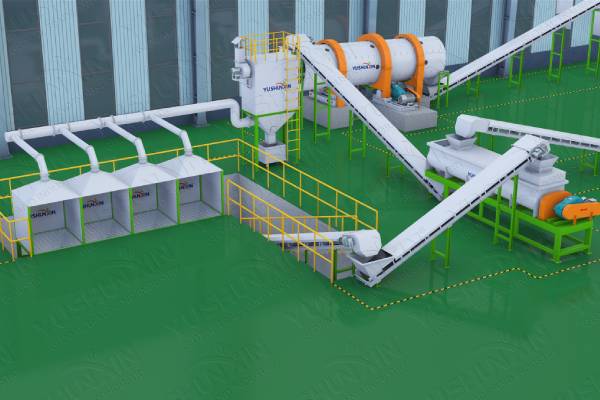
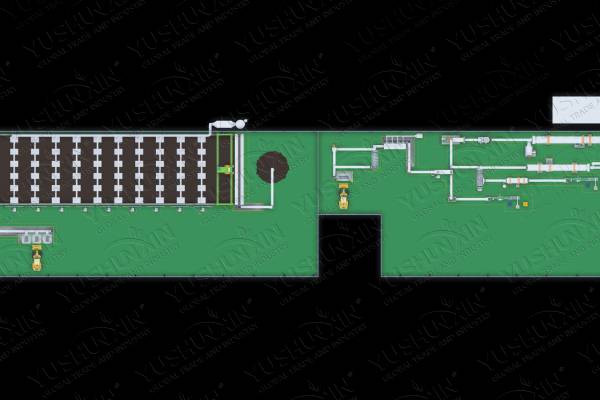
Whether you plan to produce powder bio fertilizer or granular bio fertilizer, our engineering team can help you build a reliable production line that reduces operating costs, protects microbial activity, and supports future expansion.
Get Your Fertilizer Project Proposal
Share your raw materials, production capacity and project requirements. Our engineering team will provide a suitable fertilizer production solution.


