

Whether you are processing poultry manure, cattle manure, pig manure, biogas digestate, mushroom substrate, or agricultural residues, a groove type compost turner offers a efficient solution. By combining rail-guided operation, intelligent PLC control, and continuous aerobic fermentation, it transforms livestock manure into stable organic compost in approximately 20 days under suitable operating conditions. Different project sizes require different composting solutions. Selecting the right groove composting system, rail layout, and equipment configuration can improve fermentation efficiency while reducing long-term operating and maintenance costs.
Top 3 Groove Composting Solutions for Livestock Manure Recycling
Every livestock operation produces different amounts of manure, so selecting the right compost turner depends on your daily processing capacity, available composting area, and future production plans.
Poultry Manure Composting Solution
Large poultry farms generate significant quantities of manure every day. A farm with approximately 500,000 chickens can produce around 50 tons of fresh manure daily. After moisture adjustment with straw, sawdust, or rice husks, the composting material typically reaches 60–70 tons per day, making continuous aerobic composting essential.
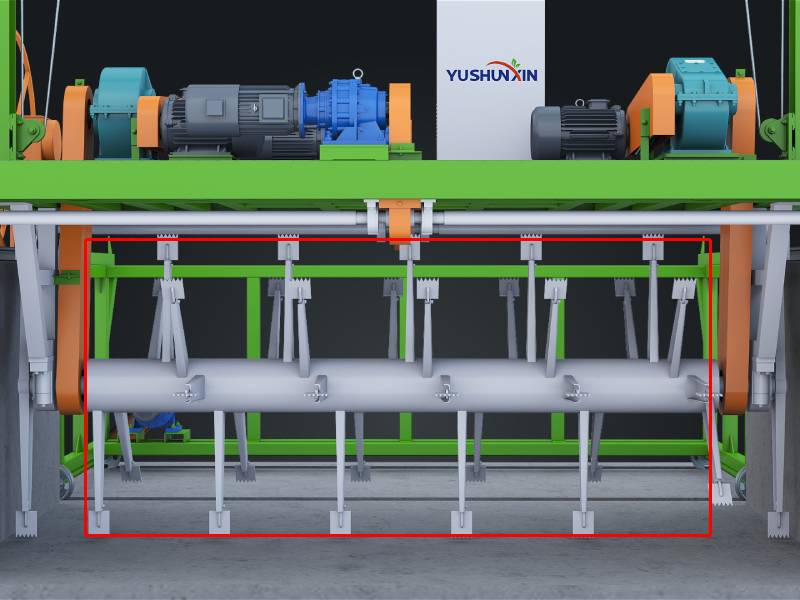
For projects of this scale, the SXCF-5000 groove type compost turner is an ideal choice. With a 5-meter turning width and 2-meter turning depth, it efficiently aerates approximately 10 m³ of compost per meter of fermentation groove. Combined with automatic rail travel, PLC control, and optional transfer carriage systems, the equipment continuously supplies oxygen, redistributes heat, and balances moisture throughout the compost pile.

When integrated with a manure dewatering machine, automatic feeding system, compost crusher, screening machine, and organic fertilizer production line, the project becomes a complete manure recycling solution capable of producing premium commercial organic fertilizer.
Dairy and Cattle Manure Composting Solution
Cattle manure contains higher moisture and greater bulk density than poultry manure, making stable aeration particularly important during composting. A dairy farm with approximately 5,000 cows can generate around 125 tons of fresh manure every day. After moisture adjustment, a complete aerobic fermentation cycle generally requires 700–750 meters of effective fermentation groove length to maintain continuous production.

The result is faster microbial activity, more uniform compost maturity, and stable raw materials suitable for downstream granulation. For commercial fertilizer producers, this also creates a reliable foundation for continuous organic fertilizer manufacturing.
Pig Manure Composting Solution
Pig manure composting requires careful moisture control to maintain efficient aerobic fermentation while minimizing odors.

Based on an aerobic fermentation cycle of around 20 days, the complete project normally requires approximately 150–170 meters of effective fermentation grooves. This configuration provides stable compost quality while leaving sufficient capacity for future production expansion.
How Does a Groove Type Compost Turner Improve Composting Efficiency?
A groove type compost turner is more than just a pile-turning machine. It keeps the compost well aerated while maintaining the moisture and temperature needed for efficient fermentation, helping you produce mature compost in less time.
How Does PLC Automation Reduce Labor and Improve Compost Quality?
As labor costs continue to rise, automation has become one of the most important considerations when designing modern composting facilities.
Can the Groove Composting System Be Customized for Your Project?
Every composting project has different raw materials, production capacities, and workshop layouts, so equipment flexibility is just as important as processing capacity.


How Can a Groove Composting System Support Your Organic Fertilizer Plant?
A groove type compost turner is not just a composting machine—it is the starting point of a complete organic fertilizer production system.

Once fermentation is complete, mature compost can be transferred automatically to a crushing system, followed by screening, automatic batching, mixing, granulation, drying, cooling, packaging, and robotic palletizing. This integrated process transforms livestock manure into premium organic fertilizer with significantly higher commercial value.
Designing the composting section together with the downstream fertilizer production line also allows future capacity expansion without major modifications, making it easier to upgrade from simple manure recycling to industrial-scale fertilizer manufacturing.
Build a Smarter Composting Solution with YUSHUNXIN
Choosing the right groove type compost turner is only one part of a successful composting project. Equally important are fermentation process design, groove layout, raw material pretreatment, automation level, and future production planning.
At YUSHUNXIN, we design complete aerobic composting solutions rather than simply supplying equipment. From manure dewatering, fermentation groove design, compost turning systems, and intelligent PLC control to downstream organic fertilizer production lines, our engineering team develops customized solutions based on your raw materials, daily processing capacity, available land, and long-term business goals.

Whether you are planning a livestock manure recycling project, upgrading an existing composting facility, or building a fully integrated organic fertilizer plant for the European market, we can help you create an efficient, scalable, and environmentally responsible composting system that delivers reliable performance and long-term profitability.
Get Your Fertilizer Project Proposal
Share your raw materials, production capacity and project requirements. Our engineering team will provide a suitable fertilizer production solution.


