
How to Reduce Fertilizer Granule Breakage During Packaging and Transport

How can you keep fertilizer granules intact during packaging and transport? Proper moisture control, gentle conveying, and suitable packaging equipment all help reduce fertilizer granule breakage and maintain consistent product quality.

By improving drying, cooling, coating, and bagging, you can protect finished granules throughout the production process. YUSHUNXIN can help you upgrade these sections without replacing your existing granulator.

20-30 tph bb fertilizer plant granules blending system

How Can Drying and Cooling Make Fertilizer Granules Easier to Handle?

rotary drum dryerrotary dryer internal lifting flights

Fresh organic fertilizer granules often contain around 15–20% moisture after wet granulation. Reducing this moisture helps the particles become firmer before conveying and packaging.

Our rotary fertilizer dryer reduces moisture from around 15–20% after granulation to 10% or lower. Inside the drum, lifting plates raise and scatter the granules as hot air removes moisture.

This helps the granules become firmer, reduces sticking, and makes them easier to handle, package, and store.

Why Add a Rotary Cooler After Drying?

rotary dryer and cooler

Fertilizer granules leave the dryer at a high temperature. If you pack them immediately, the trapped heat can cause moisture to redistribute as the fertilizer cools inside the bags. This increases the risk of condensation and caking during storage.

Our rotary cooler uses airflow and drum rotation to remove heat from the moving fertilizer. This helps prepare the granules for bagging and reduces moisture-related caking during storage.

Besides, We can connect the dryer and cooler with a belt conveyor, allowing the fertilizer to move directly into the cooling stage without interrupting production.

How Can Fertilizer Coating Keep Granules Free-Flowing?

For NPK and compound fertilizers, keeping granules separate during storage is just as important as maintaining their shape.

A rotary coating machine applies a protective surface treatment after cooling. As the drum rotates, spray nozzles distribute anti-caking liquid or oil onto the moving granules. Continuous tumbling helps the coating reach different particle surfaces. This reduces sticking and helps fertilizer remain free-flowing during storage and bag filling. We can install the coating machine between the cooling and packaging sections of an existing fertilizer granulation line.

Coating machine

How Can You Reduce Granule Damage During Conveying?

Finished fertilizer passes through several transfer points before packaging. Keeping these transfers smooth helps preserve the granules.
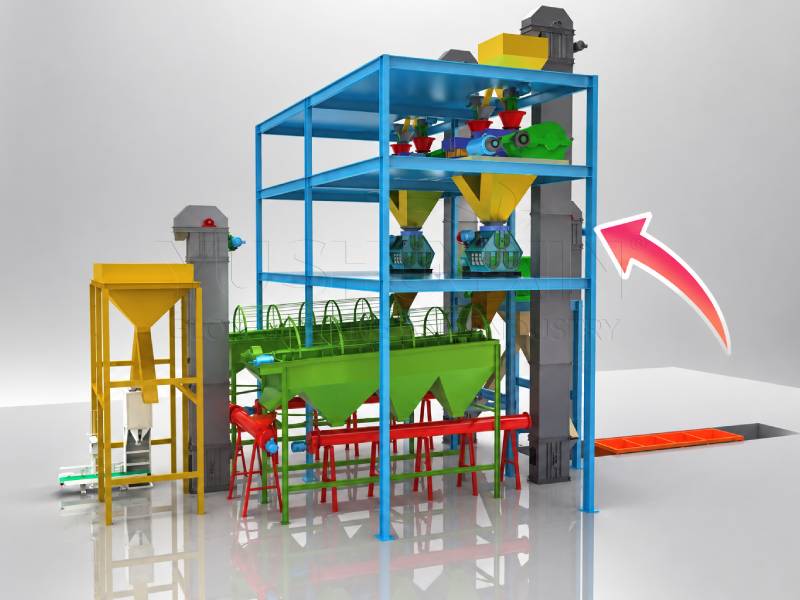
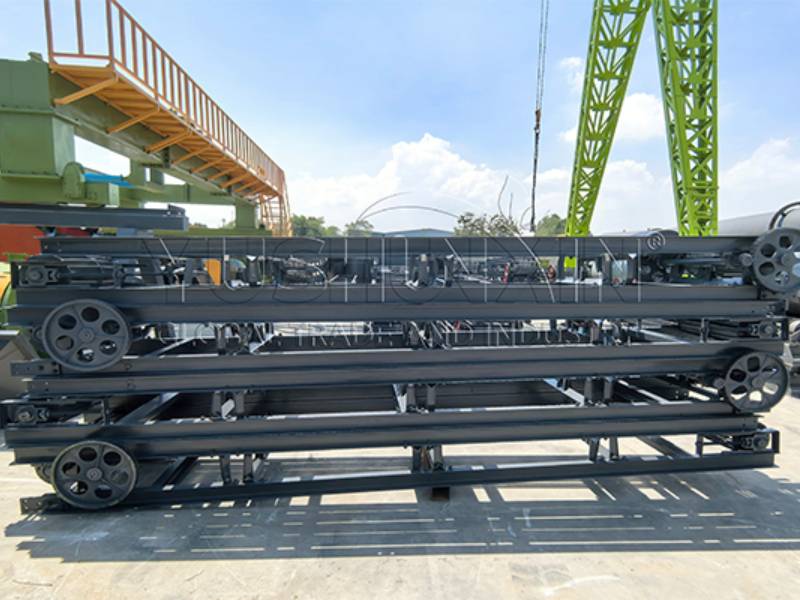
bucket elevatorbelt conveyor

For example, a high discharge point can cause particles to strike the receiving hopper. Adjusting the conveyor position reduces this unnecessary impact. We can select belt conveyors according to the distance, height, and arrangement of your existing machines. Where equipment heights differ, an adjustable-height conveyor helps align the discharge with the next processing stage.

For factories with limited floor space, a bucket elevator can lift fertilizer vertically. Its inlet and discharge arrangement can also be adapted to the material. By planning these connections carefully, you can move fertilizer through the finishing section with fewer hard impacts.

How Can Your Bagging Equipment Protect Finished Granules?

Bag filling is the final stage of bulk material handling. A controlled filling process helps maintain granule quality before sealing. Our fertilizer bagging equipment can use gravity or belt feeding according to the fertilizer’s flow characteristics. Also, We can adjust the filling outlet and bag support to reduce the distance granules fall into the bag.

Fully Automatic Bagging Machine

How Can You Protect Fertilizer Granules After Bagging?

After filling and sealing, fertilizer bags still need to be conveyed, stacked, and transported. Reducing unnecessary impacts during these steps helps keep the granules intact.

Programmable palletizing robot

Our automatic palletizing machine can work with a bag-shaping conveyor to flatten filled bags before stacking. This helps distribute the fertilizer more evenly inside each bag and creates a more stable pallet load. The palletizer then places bags in a consistent stacking pattern, reducing repeated manual lifting and repositioning.

You can also use stretch wrapping to secure the finished pallet and limit bag movement during forklift handling and transport. Together, these measures help protect your finished fertilizer from the packaging line to the customer’s warehouse.

How Can You Check Whether Your Improvements Are Working?

You can assess fertilizer granule breakage by comparing samples at different points in your existing production line. Start with the fertilizer leaving the cooling section. Then collect samples after conveying and from finished bags.

Also, you can check the fine-powder content using the same sample weight and test sieve. If the fine-powder content increases after a conveyor transfer, adjust the discharge height or receiving chute. If the increase appears during bag filling, review the feeding outlet and bag support.

For storage performance, check finished bags after a representative holding period for caking and changes in product condition. These simple checks show where improvements are most effective.