

Are you producing more, but still adding people around the packing area? For a high-output plant, manual bag placing, sealing transfer and palletizing can easily slow down the last part of production. Our automatic bagging and palletizing line can connect bag feeding, ważenie, pożywny, opieczętowanie, bag shaping and paletyzacja robotyczna, so your finished bags move through one continuous route. Whether you pack fertilizer, feed, chemicals, minerals, grain or other powder and granular products, we normally look at four things first: your material, bag size, bags per hour and workshop space.
How Can a Fully Automatic Bagging & Palletizing Line Reduce Manual Handling?
If your filler is ready but someone still has to open and place the next bag, increasing output will only make that job harder to keep up with. For this situation, we can move bag feeding into the automatic cycle. Po napełnieniu, the bag can continue directly to closing, so you do not need another manual transfer between the two steps.
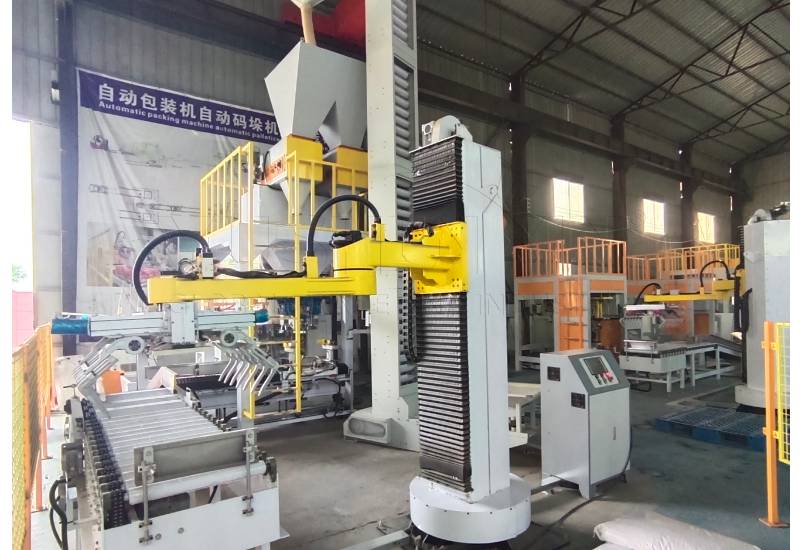
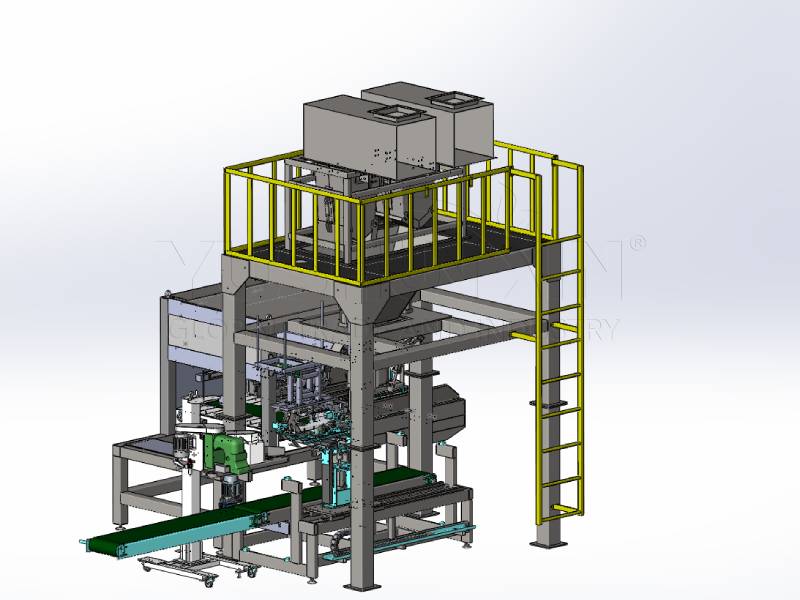
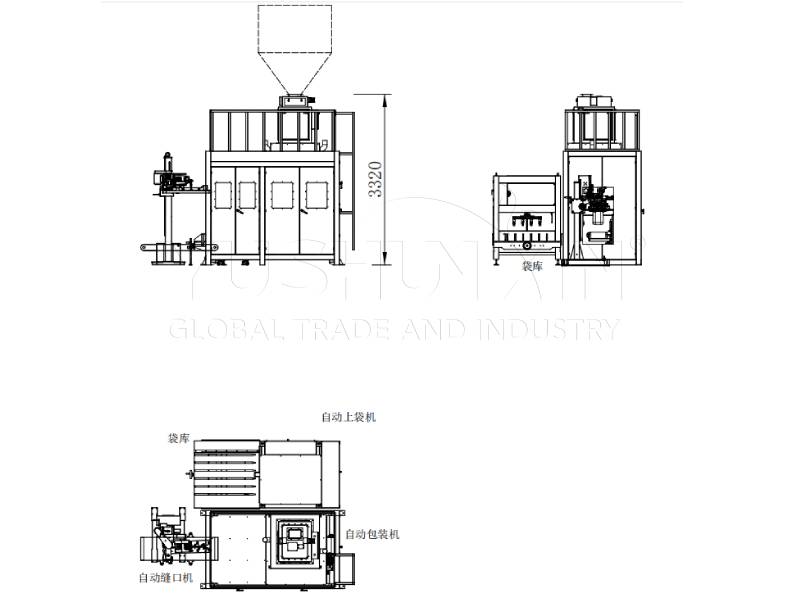
For suitable 25 kg woven bags, our YTZB-300 can feed at least 300 worków na godzinę. Two bag positions can each hold about 200 bags, depending on bag thickness. Automatic pickup, opening and placing then keep bags coming to the filling outlet, while a missing-bag alarm helps catch a failed pickup. This setup is useful when your upstream production is already steady, but manual bag placing is still holding back the packing rate.
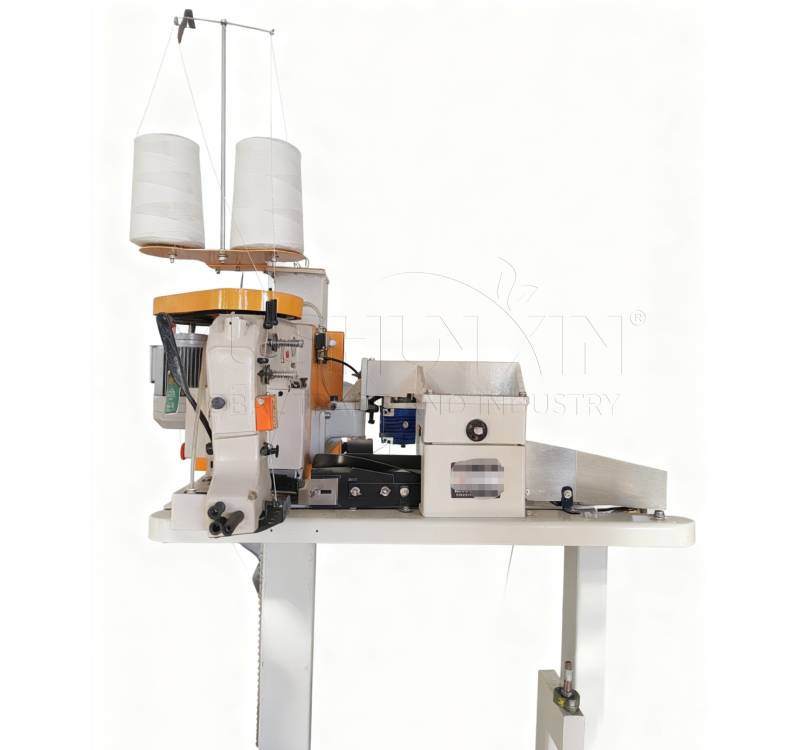
If your filler is running at around 300 worków na godzinę, closing speed also needs enough room. For woven bags, our sewing setup can run at around 10–12 bags per minute. Suitable PE or plastic bags can use heat sealing instead. At this speed, sealing can follow the filling section comfortably, so filled bags do not start building up after filling.


How Much Palletizing Capacity Does a High-Capacity Bagging Line Need?
The same plant output can create very different packaging workloads. Na przykład, 10 t/h means about 400 bags per hour with 25 kg bags, but only about 200 bags per hour with 50 kg bags. So before we choose the palletizing capacity, we first look at how many bags your line actually produces.

Which Automatic Bagging System Fits Your Powder, Granules or Mixed Materials?
Does one product pack well while another keeps slowing the filling cycle? The problem may be the way the material feeds. Granules can flow easily, while fine powder or mixed material may need a slower and more controlled feed near the target weight.
Powaga, Podawanie taśmowe lub ślimakowe
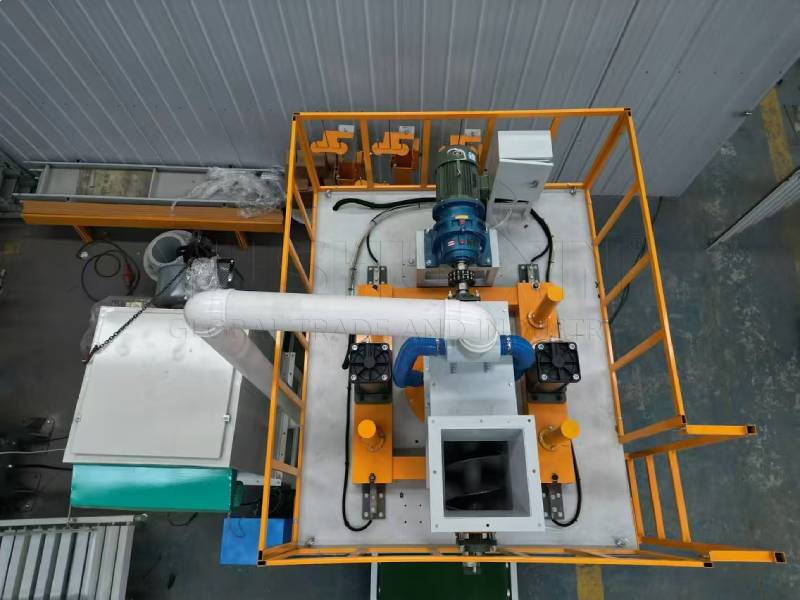
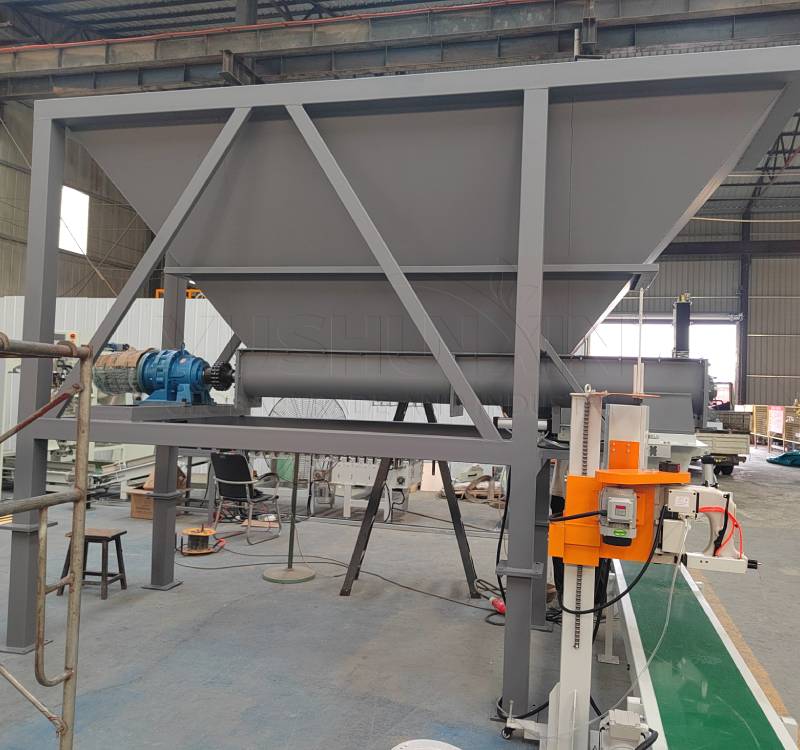
For free-flowing granules, gravity feeding may already give you the flow you need. If your product moves less evenly, we can use belt feeding. For powder-rich material, screw feeding gives you better control as the bag gets close to its final weight. If you handle several products, we can match the feeder to the way each material actually moves rather than using one feeding method for everything.
304 Stainless Steel and Dust-Controlled Filling
Are dust, corrosion or frequent replacement of contact parts already giving you extra work?


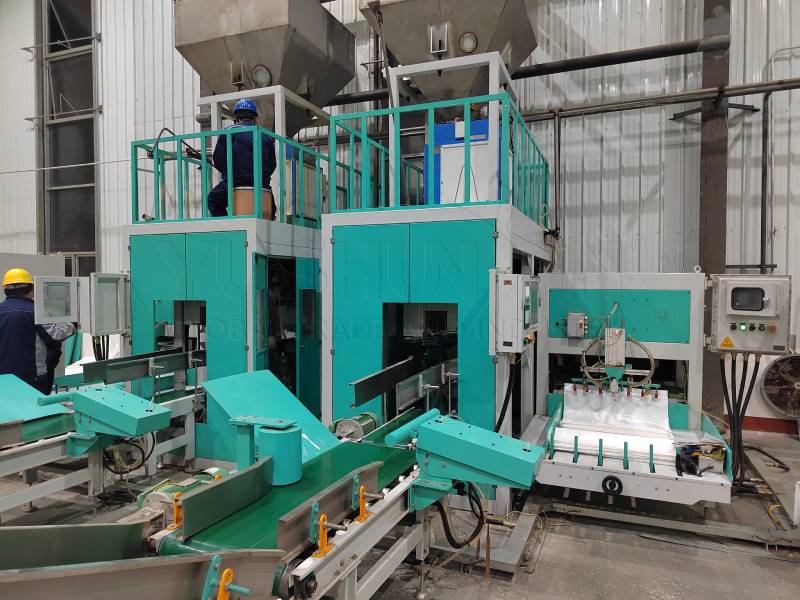
For the parts that come into direct contact with your material, we can use 304 stal nierdzewna where you need better corrosion resistance or easier cleaning. The main frame can still use protected carbon steel where that is suitable. If fine powder is spreading around the filling point, we can also connect this area to negative-pressure dust collection. This is particularly useful when you pack fertilizer, chemical powder or another material that already causes dust or corrosion problems in your current workshop.
Can an Automatic Open-Mouth Bagging Line Keep Your Existing 10–50 kg Bags?
If your current bags already work well for storage, transport and sales, you may not want to change your packaging just to add automation. In many projects, we can design the automatic bag feeding section around the bags you already use.
Our automatic packing range can work with 10–50 kg woven, paper and suitable plastic bags. One woven bag may open easily, while another may be softer, stick to the next bag or use a liner that changes the opening. With your actual bag size and material, we can adjust pickup and opening before the final setup is fixed.
Already using sewn woven bags? That closing method can stay in the automatic line. If your current bags are suitable PE or plastic bags, heat sealing can follow filling instead. You can keep the bag format that already works for your business while we match the packing equipment around it.
How Can Bag Conditioning Improve Robotic Palletizing?
Have you ever seen a pallet lean even though every bag has the correct weight? The problem may not be the filling accuracy. The bags may simply be reaching the robot in different shapes.
Why Does Bag Shape Matter Before Palletizing?
One bag can be thicker in the middle, while another carries more product at one end. If the robot stacks these bags directly, small shape differences can become more obvious after several layers. Z tego powodu, we normally prepare the bag before it reaches the robot rather than relying on the robot to correct an uneven bag during stacking.

Bag Turning, Inclined Conveying and Shaping


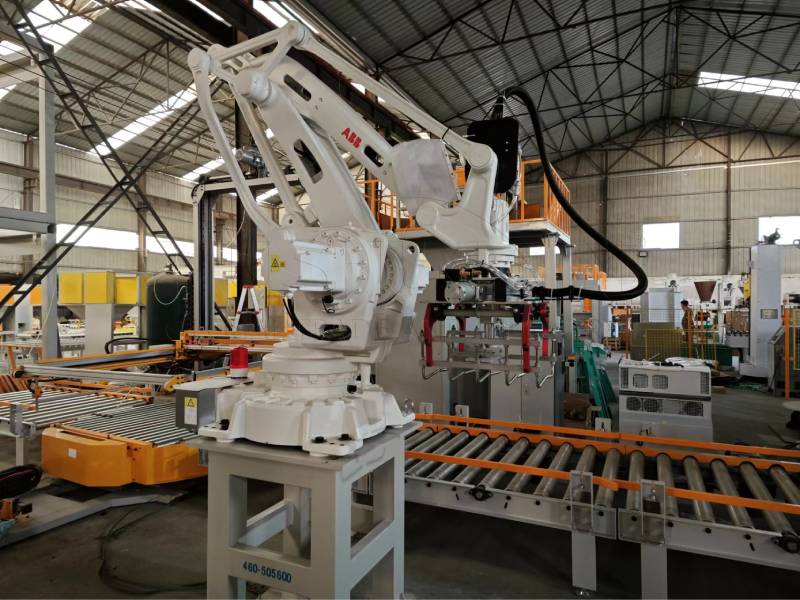
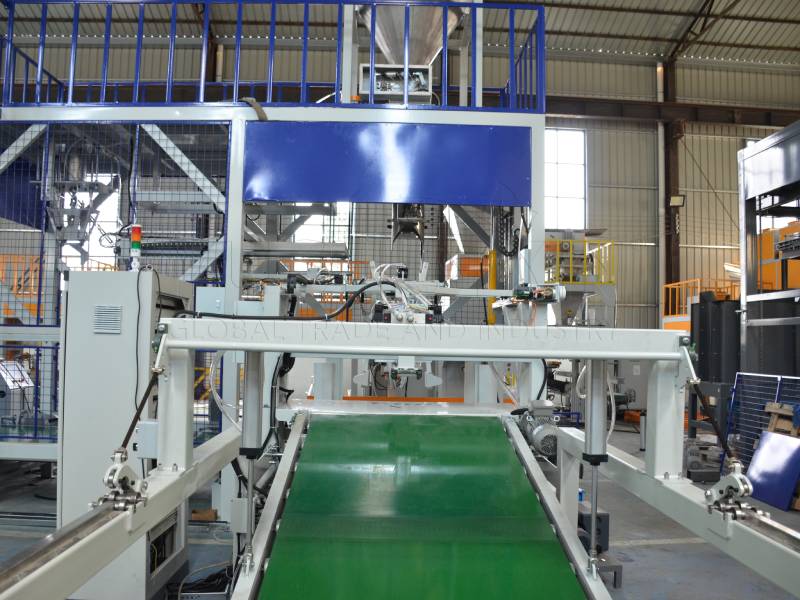
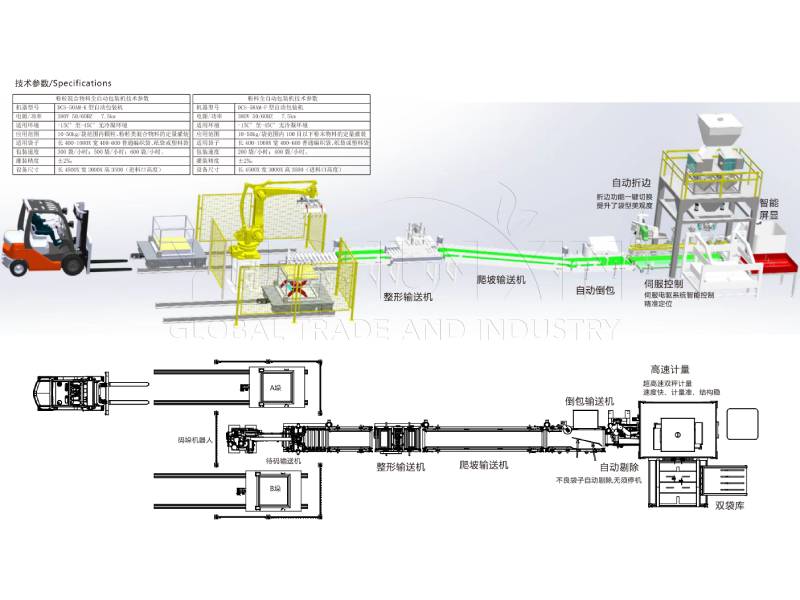
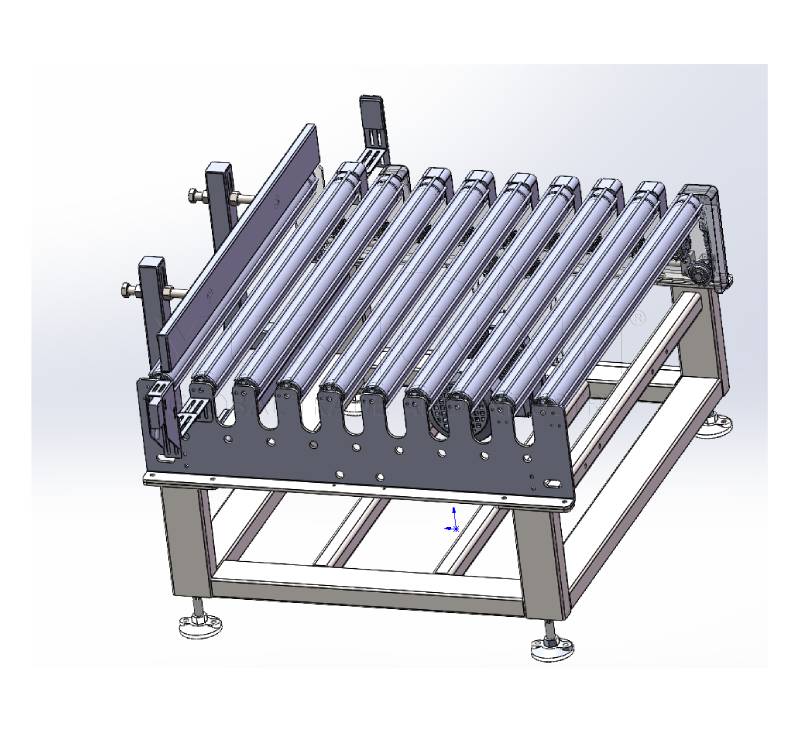
Before the robot picks up the bag, we can use: Sealing → Bag Turning → Inclined Conveying → Bag Shaping → Waiting Conveyor. The bag is laid down first. While it moves along the incline, the product can spread more evenly inside the bag. The shaping section then makes the bag flatter before pickup. Relevant turning guides can use S304, chwila 304 stainless-steel rollers can be used around the waiting and pickup area.
How Does This Help the Robot Build a More Stable Pallet?
After shaping, each bag reaches the pickup position in a more regular form. That gives the robot a more consistent bag to work with when it builds each layer. W rezultacie, the pallet is less affected by bags that are too thick in the middle or uneven at one end. This step becomes especially useful when your material settles differently after filling and bag shape is not always the same.
How Can an Automatic Bagging & Palletizing Line Fit Your Existing Workshop?
You may already have a hopper, weighing section, conveyor or forklift route that works well. W takim razie, you may only want to replace the part that is slowing production. Our line layout can follow the space and equipment you already have, while control and robot safety can also be planned around your current workshop.


What Information Helps Us Configure Your Automatic Bagging & Linia do paletyzacji?
You do not need to prepare a long technical specification before talking with us. The information that changes the design is much simpler:
Maybe your main problem is manual bag placing. Maybe filling is already fast enough, but sealing or palletizing cannot keep up. You may also be dealing with dusty material, difficult bags or limited workshop space. When we know your material, bag size, required bags per hour, pallet size and workshop layout, JUSHUNXIN can work through these points with you and select the parts that actually belong in your project.
Uzyskaj propozycję projektu dotyczącego nawozów
Podziel się swoimi surowcami, zdolności produkcyjne i wymagania projektu. Nasz zespół inżynierów zapewni odpowiednie rozwiązanie do produkcji nawozów.


